Traditional Malaysian Culture Vector Review
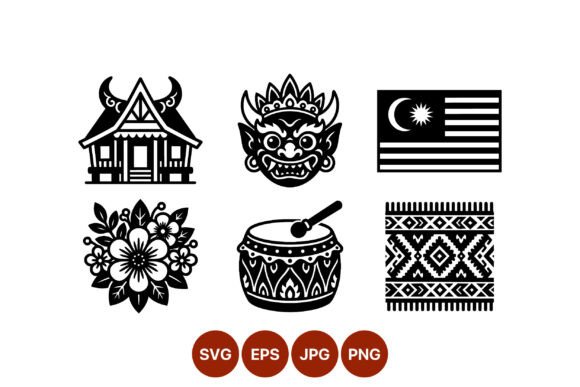
When I first opened the Traditional Malaysian Culture Vector, my initial reaction was one of curiosity mixed with practical caution. As a designer who spends hours converting digital assets into stitched reality, I don't just look for pretty pictures; I look for stitchability. This collection of black and white vector icons featuring a traditional malaysian hut, demon mask, national flag, floral bouquet, drum with mallet, and tribal pattern in flat design presents a unique challenge. It is not a standard machine embroidery file ready to drop onto a hoop, but rather a set of Illustrations that requires translation into thread.
The flat design aesthetic creates a clean, modern mood that feels surprisingly versatile. The shapes are bold enough to hold their own on a canvas or denim, yet intricate enough to suggest cultural depth. However, the transition from a vector graphic to a physical embroidery project demands careful consideration. If you are an Etsy seller or a small business owner looking to add authentic cultural flair to your inventory, this design has potential, but it requires a strategic approach to ensure the final product looks professional rather than amateurish.
From Digital File to Finished Product
Imagine you are preparing a custom embroidered tote bag for a boutique client who wants to celebrate heritage. You decide to use the traditional malaysian hut icon from the Traditional Malaysian Culture Vector. In its vector form, the lines are crisp and perfect. But once you convert those paths into a machine embroidery design, the geometry changes. The flat fill areas must become satin stitches or fill stitches, depending on the size. The sharp corners of the hut's roof might need to be softened slightly to prevent thread breaks, while the tribal patterns could easily get lost if the stitch density is too low.
I tested this concept mentally against a few common scenarios. For a sweatshirt embroidery project, the bold silhouette of the demon mask works well because it relies on strong outlines. However, for a baby item like a onesie, the same design might be too heavy. The dense stitch areas required to make the flat colors visible can create a stiff patch that isn't comfortable against delicate skin. This is where the distinction between Graphics and functional embroidery becomes critical. A vector is static; embroidery is dynamic and tactile.
The national flag and floral bouquet elements offer different opportunities. The flag is simple and geometric, making it ideal for a cap or hat where space is limited. The floral bouquet, however, benefits from a softer stitch type. If you are creating personalized gifts, using these vectors as a base allows you to customize the color palette without losing the structural integrity of the original art. The black and white nature of the source files means you have total control over the thread colors, allowing you to match specific brand guidelines or seasonal themes.
Where This Design Shines
This collection fits best in projects where cultural storytelling is the primary goal. Think about a kitchen towel design for a home goods shop. The combination of the drum with mallet and the floral bouquet can create a festive, welcoming image that tells a story of celebration. When stitched on a textured fabric like linen or cotton duck, the flat design takes on a new dimension. The shadows created by the stitching depth enhance the visual appeal, making the product feel more valuable and handmade.
For commercial embroidery projects, such as branding for a cultural center or a craft fair booth, the tribal pattern serves as an excellent background texture. Instead of filling an entire area, you can use it as a border or a subtle backdrop behind larger text. This adds a layer of sophistication that generic clipart simply cannot achieve. Customers often react positively to designs that feel authentic and respectful of the culture they represent. The Traditional Malaysian Culture Vector provides that authenticity, provided it is executed with care.
I also see great potential in printable mockups for digital product sellers. Before investing time in digitizing every single icon, you can use these vectors to create high-quality previews. Showcasing how the hut looks on a pillow cover or how the mask appears on an apron helps buyers visualize the end result. This increases buyer engagement and trust, as they can see the clarity of the design before committing to a purchase.
Areas Requiring Caution
While the design is robust, there are specific situations where it should be used carefully. Small hoop sizes are a major limitation. The detail level in the tribal pattern and the facial features of the demon mask may become muddy if reduced too much. When stitching on thin fabric, the tension required to hold the design together can cause puckering, especially around the dense fill areas of the hut or the flag. Stretchy fabrics like jersey require a stabilizer that matches the fabric's elasticity, or the embroidery will distort after washing.
Dense stitch areas are another concern. If you attempt to stitch the entire tribal pattern as a solid block, you risk overwhelming the fabric. It is better to break down complex patterns into smaller sections or use a lighter stitch density. Curved surfaces like caps present their own challenges; the flat design might not lay perfectly flush against the curve unless the digitization accounts for the curvature of the hat. Similarly, dark fabrics can hide the details of a black and white vector if you do not choose high-contrast thread colors. Always test the design in black and white mockups first to ensure the contrast remains effective.
Practical Designer Notes for Success
If you plan to turn this vector collection into a successful embroidery file, follow these practical steps. First, always test the design on scrap fabric that matches the weight and texture of your final product. This helps you identify potential issues with thread tension or fabric stability before you commit to a customer's order. Check the thread color contrast rigorously; what looks good on a screen might disappear on a navy blue shirt.
Review the stitch density closely. High density creates a premium look but adds bulk and cost. Low density saves money but might look sparse. Confirm the hoop size requirements early in the process to avoid resizing errors. Inspect small details like the tips of the drum mallets or the petals of the flowers; these tiny elements often fail first during production. Use proper stabilizer to support the fabric, especially for lightweight materials.
It is crucial to check whether the design works for both personal and commercial projects. Licensing terms vary, and selling finished items made from these graphics without the proper rights can lead to legal trouble. Confirm the license before selling custom apparel or handmade products at a craft fair. Finally, compare light and dark fabric backgrounds to ensure the design retains its identity regardless of the substrate.
In conclusion, the Traditional Malaysian Culture Vector is a valuable asset for designers willing to put in the work to translate it into thread. It offers a rich tapestry of cultural symbols that can elevate any embroidery project from ordinary to extraordinary. Whether you are creating a holiday gift, a boutique product, or a piece of digital embroidery file art, this collection provides a strong foundation. By respecting the limitations of the medium and applying thoughtful digitization techniques, you can create finished products that honor the tradition and delight the wearer.